CNC Machining Careers in 2026: Salary, Skills, Tools & How to Become a CNC Machinist
If you're thinking about getting into CNC (Computer Numerical Control), there are four practical questions to answer: Is it a good career? What does it pay? What do you need to learn? And how long does it take to get started?
Before we look at training paths, let's establish the baseline. The latest available U.S. data shows that machinists earn a median annual wage of about $58,750, or approximately $28.24 per hour. BLS projections also show a steady flow of job openings through 2034, driven largely by replacement demand.
The Short Answer: Is CNC Machining a Good Career in 2026?
Yes. CNC is still a stable technical career: the U.S. Bureau of Labor Statistics (BLS) projects machinist employment (51-4041) to stay roughly flat through 2034, with about 29,500 openings a year (openings include growth plus replacement; since employment growth is near zero, they usually come mostly from replacement demand). Most jobs don't require a college degree. When hiring and promoting, many employers care most about whether you can run the "machine, measure, fix" loop on your own. Automation will make some basic operations more routine; at the same time, stronger setup, measurement, and process skills matter more — and they tend to lead to higher roles and higher pay bands.
Note: BLS reports different outlooks for the single occupation (Machinists) and the combined occupational group (Machinists + Tool & Die Makers), which is why you may see both 0% and -2% figures.
CNC Machinist Salary in 2026 — Full Breakdown
Short answer: the median CNC machinist salary in the US is about $58,750/year (~$28.24/hr); entry-level (P10) is around $39,200, and top earners (P90) reach about $80,010. Pay follows skills (programming, process, setup) more than years on the job.
Note: These wage figures come from the U.S. Bureau of Labor Statistics (BLS) Occupational Employment and Wage Statistics for Machinists (SOC 51-4041), which covers both CNC and non-CNC machining roles. Actual pay varies by employer, location, industry, and experience.
US Salary Percentiles (SOC 51-4041 Machinists)
| Percentile | Annual Salary (USD) | Hourly Rate (USD) |
|---|---|---|
| P10 (Entry) | $39,200 | $18.85 |
| P25 | $47,570 | $22.87 |
| P50 (Median) | $58,750 | $28.24 |
| P75 | $67,700 | $32.55 |
| P90 (Top) | $80,010 | $38.47 |
How to read this table:
- P10/P25 look like the band for entry-level and operator-heavy roles;
- P50 usually means you can hold dimensions consistently on your own;
- P75/P90 typically correspond to complex setups, more process capability, and stronger programming and optimization skills.
The Real Pay Ladder: Salary Follows Skills, Not Years
In a shop, pay usually rises with responsibility, not tenure. This skill ladder is a useful map:
| Level | Typical Salary (Reference) | Core Skills (3 Key Points) |
|---|---|---|
| CNC Operator (0–2 yrs) | ~$39,200 (≈P10) | Running and monitoring / basic measurement and logging / reading G-code structure |
| CNC Machinist (2–5 yrs) | ~$58,750 (≈P50) | Editing offsets and coordinates / holding tolerance and repeatability / troubleshooting common issues |
| Setup / Senior (5–8 yrs) | ~$67,700 (≈P75) | First-part workholding and zeroing / test cuts and process tuning / bringing jobs to production and training others |
| Programmer / Lead (8+ yrs) | ~$80,000+ (≈P90) | CAD/CAM programming / fixture and workholding design / efficiency and quality optimization |
(The P10/P50/P75/P90 figures come from the table above; this ladder pairs typical shop roles with the pay bands they usually land in.)
Highest-Paying States (Examples)
The same job pays very differently by state. These three states stand out with notably higher medians (BLS 2025):
- Alaska: $77,670/yr
- Washington: $66,160/yr
- Connecticut: $62,130/yr
Common drivers include the local industry mix (aerospace, marine, energy, defense), cost of living, and the share of high-skill roles in the region.
International Comparison: UK
UK National Careers Service lists CNC machinist pay at roughly £25,000 to start, rising to about £42,000 once skilled.
Salary figures are useful, but they become more meaningful when you connect them to the work behind each pay band. In practice, pay usually rises as you take on more responsibility for setup, measurement, process control, and programming.
The CNC Career Ladder — From Operator to Programmer
Think of a CNC machining career as a four-level progression, not a tenure race:
- Operator: keep the process stable — loading / first part / alarms
- Machinist: hold the dimensions — offsets / measurement / troubleshooting
- Setup/Senior: bring new jobs into production — workholding / test cuts / cycle time
- Programmer/Lead: own efficiency and quality — CAM / fixtures / optimization
What Skills Do You Need to Be a CNC Machinist?
CNC isn't about memorizing jargon — it's a loop: read the requirement → pick the method → machine → measure → correct → repeat reliably. You don't need all of it mastered upfront; getting the loop working is enough to start.
6 Hard Skills (Prioritize These)
- Blueprint reading: read dimensions, tolerances, and datums — the basis of every job.
- GD&T (geometric dimensioning & tolerancing): controls part shape and position — you don't need to be an expert, just know what it governs.
- G-code basics: read program structure and edit offsets, coordinates, and feed/speed — this is how you adjust parameters.
-
CAD/CAM (toolpath software that turns a model into machining paths): model, generate toolpaths, post-process, and verify. If you're still comparing software options, see our guide to the best CAM software for beginners.
- Self-study is cheaper than ever: Fusion offers a free personal non-commercial license, and Mastercam has a Learning Edition (note: the Fusion personal license is a limited non-commercial version; the Mastercam Learning Edition doesn't output G-code).
- Feeds & speeds: the same bit behaves differently in every material — this decides whether you cut cleanly. For help choosing the right bit, see our CNC router bits guide for beginners.
- Precision measurement (metrology): calipers, micrometers, dial indicators — measure right, or you can't correct right.
4 Soft Skills
- Basic math and unit conversion (inch/mm, fractions, decimals, some trigonometry)
- Attention to detail and self-inspection habits (first-part checks, in-process checks, logging offsets)
- Troubleshooting mindset (out-of-tolerance parts, chatter, burrs, tool life, thermal drift)
- Safety awareness (guards and shop risks)
Practice at Home: What a Desktop CNC Can Teach You
These skills are easiest to build through complete projects rather than isolated software exercises. The real learning loop is setting up a job, finding the work zero, machining a first part, measuring it, and correcting the process.
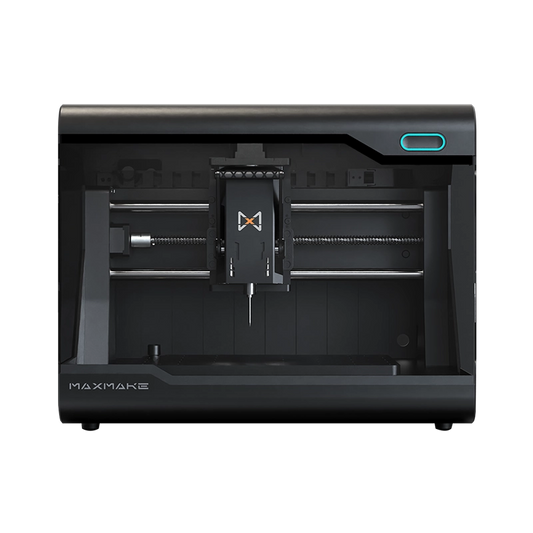
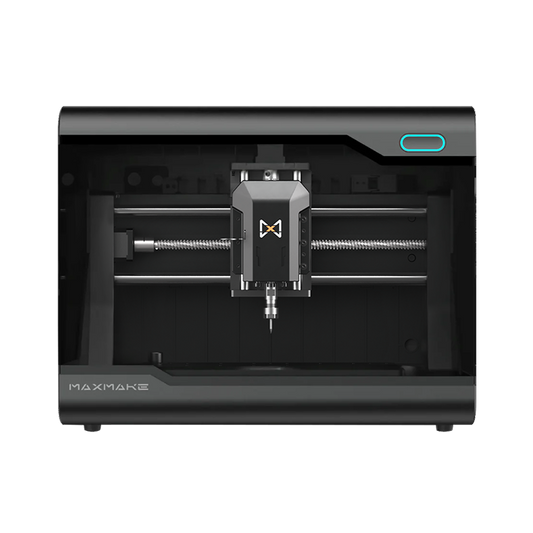
That is where a desktop CNC can be useful. A machine such as the HiMill D1S, with probing or automatic tool-setting features, lets beginners practise more of this workflow at home.
How to Become a CNC Machinist — 4 Paths Compared
Short answer: all four paths work — trade school/community college (9–24 months), a paid apprenticeship (several years), direct hire starting as an Operator (immediate), or self-study with a desktop CNC (3–12 months). For many beginners, a practical low-cost option is to learn the basics first, apply for an Operator role, and then build toward setup and programming.
According to BLS, machinists typically learn through on-the-job training; some enter through vocational school, community college, or apprenticeships.
Here's how the four paths compare:
| Path | Typical Time | Typical Cost | Who It's For |
|---|---|---|---|
| Trade school / community college | 9–24 months | Varies by region | Structured courses and job placement support |
| Paid apprenticeship | Several years | Low (earn while you learn) | A guided, earn-while-you-learn route |
| Direct hire (start as Operator) | Immediate | Low | Ready to enter a shop and move up through experience |
| Self-study + desktop CNC (new path) | 3–12 months (effort-dependent) | Equipment + materials | Career changers who want to test the waters before investing |
The four paths above are different entry points. The sequence below turns them into a practical plan that works whether you choose school, an apprenticeship, direct hire, or self-study.
A Universal 7-Step Route
- High school diploma / GED (the common US baseline)
- Brush up on math and unit conversion (inch/mm, fractions, decimals)
- Learn blueprints and basic measurement (so you can do first-part checks)
- Run 3–5 small but complete CAM projects: model → toolpath → machine → measure → fix
- Get into a shop (or an apprenticeship/internship): favor roles where you touch setup, measurement, and troubleshooting
- Focus on holding tolerances and repeatable results (the jump from P25 to P50)
- Keep climbing: learn fixture and workholding thinking, plus programming and optimization (toward P75/P90)
Self-Study Path Timeline (3–12 Months)
- Weeks 0–4: blueprints + measurement + CAM basics — make 1–2 simple parts and get the "read → toolpath → machine" loop working.
- Weeks 5–8: feeds & speeds, bits, first parts and re-measurement — make 2–3 functional parts and practice "measure, adjust, re-measure".
- Weeks 9–12: portfolio and interview prep — turn "how you held tolerance / solved a problem" into 2–3 case studies you can talk through.
At home, the point is to stabilize the "machine, measure, fix" loop — exactly what a desktop CNC (such as the HiMill D1S) lets you practice early. For project ideas, see easy CNC projects for beginners; to compare machines, see best desktop CNC machines.
CNC Machinist Certification — Do You Need NIMS?
Most CNC jobs don't require certification, but a credential lets you prove your skills faster — especially when you're starting out or aiming for a promotion. BLS also notes that certification is optional, yet it helps demonstrate competence and supports advancement.
In the US, NIMS is a common industry certification body. NIMS credentials typically combine a theory exam with hands-on performance evaluation; the practical portion can be machining a NIMS part from a print and having it inspected (depending on the credential).
Common related directions include CNC mill/lathe Programming, Setup, and Operations credentials, plus CAM Milling/Turning.
CNC vs Related Careers — Operator, Machinist, Tool & Die
Knowing how these roles differ keeps you from learning the wrong things:
- CNC Operator: runs the machine and does in-process checks. Lowest barrier, most common entry point.
- CNC Machinist: responsible for dimensions, tolerances, and process stability; measures, compensates, and troubleshoots.
- Tool & Die Maker (tooling): more about manufacturing systems — fixtures, dies, fitting; specialized, with a high ceiling.
- CNC Programmer: turns CAD into CAM and process into toolpaths, and owns efficiency and quality.
BLS notes that machinists usually operate CNC machines, while CNC programmers convert CAD into CAM programs — the split varies by company, but programming skills keep gaining value.
How CNC Skills Are Changing in 2026
- Automation is spreading: basic operations get more routine — learn coordinate systems, the measurement loop, and compensation logic early, not just button-pushing.
- CAM self-study is getting cheaper: free personal licenses (Fusion) and learning editions (Mastercam) let you practice toolpaths and process planning before you're in a shop.
- AI enters the workflow, but process judgment stays king: AI can suggest, but it won't take responsibility for a crash, an out-of-tolerance part, or scrap. The people who stabilize quality and throughput stay the most valuable.
Frequently Asked Questions
How much does a CNC machinist make?
US machinists (51-4041): median about $58,750/yr ($28.24/hr); P10 around $39,200/yr; P90 around $80,010/yr.
How long does it take to become a CNC machinist?
It depends on the path: apprenticeships usually take several years; trade school or community college about 9–24 months; self-study about 3–12 months.
Do I need a degree to be a CNC machinist?
No. Most machinists enter with a high school diploma or GED and learn through on-the-job training.
Is CNC machining a good career in 2026?
Yes. Demand stays steady (about 29,500 openings a year), and top-percentile pay is much higher — skills measurably change your income band.
What is the difference between a CNC operator and a CNC machinist?
An operator runs the process; a machinist is responsible for dimensions, tolerances, and process stability — with stronger measurement, compensation, and troubleshooting.
What tools do CNC machinists use?
Calipers, micrometers, a dial indicator with base, squares, height gauges, and pin/feeler gauges — for measuring, setup, and first-part checks.
Is CNC machining hard to learn?
There's a learning curve, but it's not mysterious. Treat it as a "machine, measure, fix" loop and you'll learn fastest.
Do CNC machinists need certification (NIMS)?
Most jobs don't require it, but NIMS credentials prove you can do the work and help with hiring and promotion.
Can I learn CNC on my own?
Yes. Start with free or personal CAD-CAM licenses (Fusion personal, Mastercam Learning Edition) to practice the basic workflow, then apply for entry-level jobs or apprenticeships.
What pays more: machinist or programmer?
Programmer/Lead usually has a higher ceiling, since it directly drives efficiency and quality — and it sits closer to the top pay percentiles.
Final Verdict
The verdict is simple: starting a CNC career in 2026 can still be a solid choice. You do not necessarily need a college degree, but you do need to build practical skills in measurement, tolerance control, setup, process planning, and programming.
A sensible route is to validate your interest with a few small CAM and machining projects, choose the entry path that fits your situation, and then keep moving toward setup, troubleshooting, and programming responsibilities.
You do not need to master everything before you begin. Start with one complete project, measure the result, correct what went wrong, and repeat. That simple loop is the foundation of CNC work.
Ready to Start Practicing?
Reading about CNC is useful, but the fastest way to understand the workflow is to complete a small project yourself. If you want to practise the full process at home — from CAD/CAM and setup to machining and measurement — take a look at the HiMill D1S desktop CNC, which can also machine aluminum.
You can also start with our guide to 10 easy CNC projects for beginners. Choose one small project, make the part, measure the result, and document what you would improve next time. That is how CNC knowledge turns into practical skill.
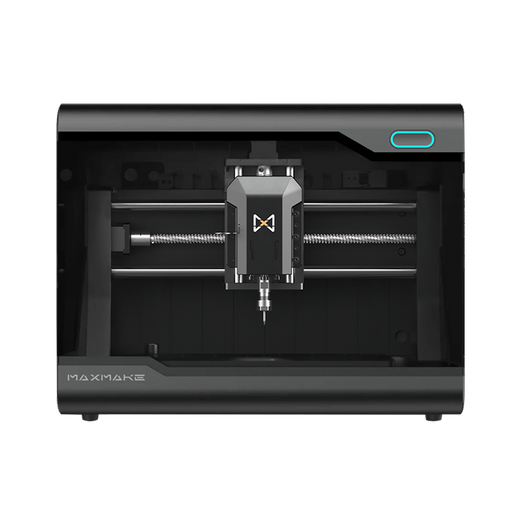
HiMill D1 Desktop CNC Machine
Connect with the MAXMAKE community
Share your projects, discover new ideas, and connect with other makers.
Join Our Community
Share projects, ask questions, connect with makers