From Timber to Treasure: Do You Truly Understand the Material You’re Cutting? — Wood Edition

I. Wood "Personalities": A Pre-Machining Diagnosis
Wood is an anisotropic material—its density and fiber direction dictate the logic of every toolpath move. Before you cut, you must diagnose the material.
Softwoods & MDF
Includes species like Pine and Basswood, plus medium-density fiberboard (MDF). Loose fiber structure leads to low cutting resistance but makes it prone to fuzzing. MDF, while grain-free, has poor thermal conductivity, requiring strict heat management to prevent charring and discoloration.
Hardwoods
Includes dense species like Walnut, Oak, and Maple (density >0.6g/cm³). Tight grain structure creates high cutting forces, demanding rigid tooling and efficient chip evacuation to avoid tool breakage and overheating.

Fig 1: Identifying material variance is the foundational step in setting CNC parameters.
II. Hardware & Tooling: The D1S Advantage
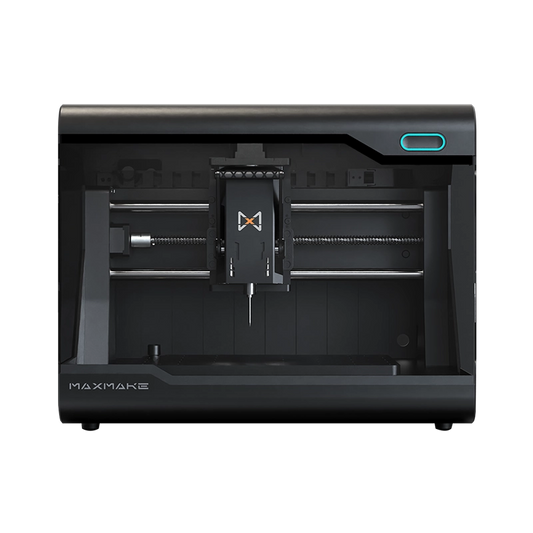
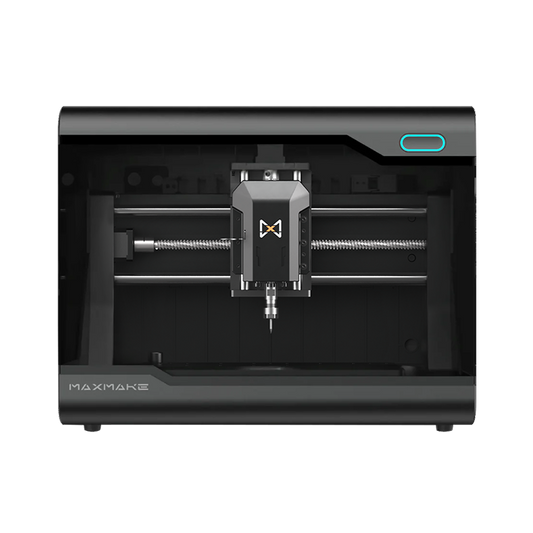
The versatility of the D1S lies in its interchangeable Collet Kits, which define the performance ceiling of your workstation.
- 3.175mm (1/8") System: Ideal for high-precision relief carving and fine detail work.
- 6mm / 1/4" System: Enabled via Collet Kit upgrade. Offers 4x the rigidity for heavy-duty hardwood roughing.
The Expert’s Tool Library:
Chip Evacuation King
Prevents Fiber Tearing
3D Relief Master
Razor-sharp Detail

III. Field-Tested Optimization Data
1.Roughing Phase: Rapid Material Removal
Objective: Remove material in the shortest time possible.Recommended tools: Single-flute or corn cob end mills.
| Material | Tool | RPM | Feed | DOC | Logic |
|---|---|---|---|---|---|
| MDF / Soft Pine | 3.175 Corn Cob | 12,000 | 800-1000 | 2.5-3.0mm | Prevents resin melting. |
| Med / Hardwood | 3.175 Single-Flute | 13,000 | 600-800 | 1.0-1.5mm | Protects 250W spindle. |
| High-Efficiency | 6mm Single-Flute | 13,000 | 1000 | 2.0-3.0mm | Efficiency tripled via 6mm. |
2. Finishing Phase: Achieving Silky Surfaces
Objective: Eliminate tool marks. Stepover is the critical parameter.
Recommended tool: Double-flute ball nose end mill.
| Machining Goal | Feed Rate | Stepover | Logic |
|---|---|---|---|
| Standard Finish | 800 mm/min | 0.3mm (10%) | Optimal speed & feel. |
| Art-Grade Relief | 500 mm/min | 0.1mm (3%) | "Mirror-smooth" results. |
3. Detail Engraving:
Recommended tool: V-bit engraving tool.Maintain feeds between 500-800 mm/min. In hardwoods, always reduce DOC to protect fragile V-tips from snapping.

IV. Deep Analysis: Expert Logic
• Chip Load: Every cut shears a specific thickness. Too fast causes lost steps; too slow causes bit rubbing and charring.
• Grain Direction: Resistance spikes on end-grain. For Oak, use Climb Milling for the final pass to achieve the cleanest surface.
• Power Management: Spindle peaks at 13,000 RPM. Rule: If resistance occurs, reduce DOC rather than Feed Rate to avoid bit annealing.
Clean = Perfect
Screaming = Friction
Flakes = Perfect
Powder = Grinding
Warm = Normal
Hot = Parameters Wrong
Expert Tips: Avoiding the Pitfalls
Roughing: Use Conventional to minimize vibration. Finishing: Use Climb for the final pass to achieve a surface finish without fiber tear-out.
Charring means you're too slow! Keep feeds above 500mm/min at 13k RPM to ensure you're shearing the wood, not rubbing it.
Cross-grain paths spike resistance. Reduce feed rate by 20% for complex orientations to prevent spindle overload and lost steps.
Sawdust is a thermal insulator. Trapped chips lead to bit softening. Always clear chips regularly or use a dust collection system.
VI. Maintenance: Precision & Longevity
Keep the spindle taper dust-free. Even a microscopic speck inside the collet causes Runout, leading to chatter marks on hardwoods.

Professional Tools + Deep Knowledge = Masterful Artistry.
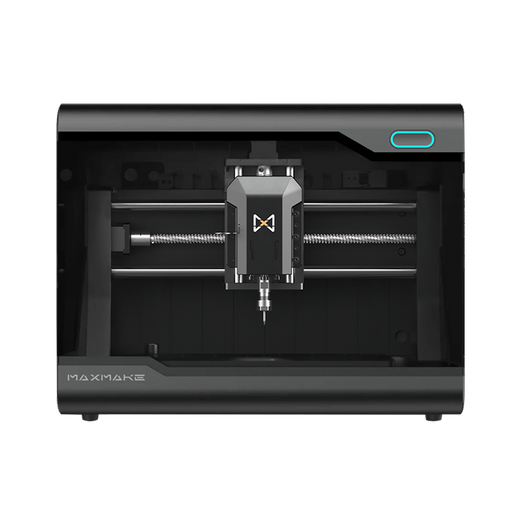
HiMill D1 Desktop CNC Machine
Connect with the MAXMAKE community
Share your projects, discover new ideas, and connect with other makers.
Join Our Community
Share projects, ask questions, connect with makers