CNC Machining a Full-Metal Raspberry Pi Case from a Solid Aluminum Block
In this project, we transform a solid 100mm × 100mm × 10mm aluminum block into a precision-engineered, full-metal Raspberry Pi enclosure from scratch. The build covers double-sided CNC milling, I/O port cutouts, alignment pin holes, and edge chamfering—delivering a production-grade, functional enclosure engineered for both physical protection and efficient thermal dissipation.
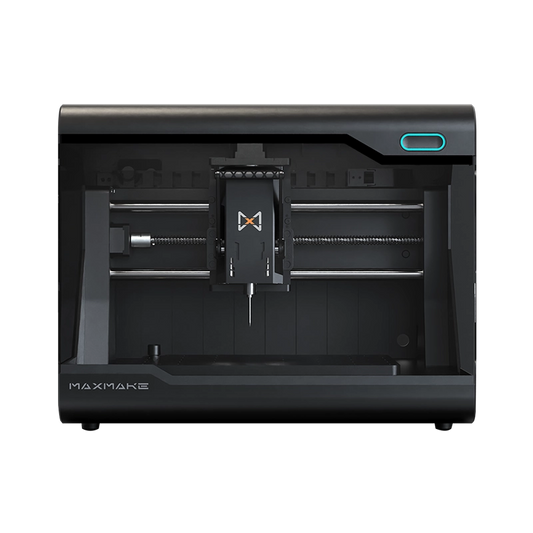
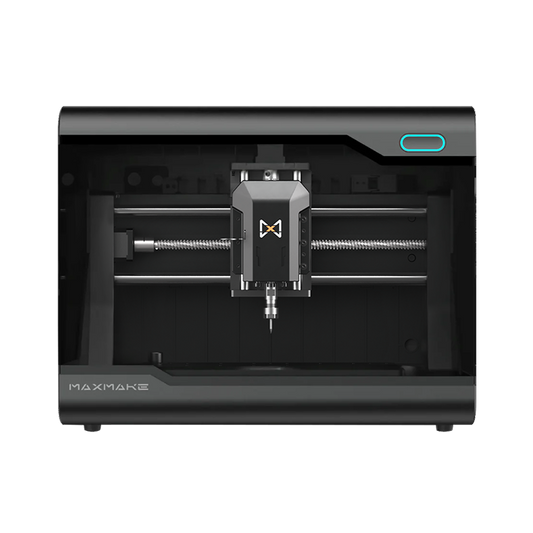
Executed entirely on the MAXMAKE HiMill-D1S Desktop CNC, this case study highlights what desktop CNC machining can truly accomplish: rigid aluminum cutting, multi-tool setup, precise double-sided flipping, and sub-0.05mm assembly tolerances.

Project Overview
This project is a double-sided fixturing aluminum milling job requiring deep-cavity clearing, I/O connector slotting, locator pin hole drilling, and smooth edge chamfering. Through high-precision aluminum cutting, the enclosure chassis, port openings, and internal alignment structures are seamlessly unified into an integrated, rock-solid housing.
- Project NameHardcore All-Metal Raspberry Pi Enclosure
- Machining PlatformMAXMAKE HiMill-D1S Desktop CNC
- Core Material100mm × 100mm × 10mm 6061 Aluminum Block
- Toolpath FilesTop_Face.nc, Bottom_Face.nc, Profile_Alignment.nc
- Estimated RuntimeApprox. 7 Hours
- Difficulty Level★★★★☆ (Two-sided setup, tight mating tolerances, alignment slots)
Phase 1: Model Design & Tooling Preparation
The enclosure follows a modular engineering architecture. The raw aluminum block is machined into the primary chassis base while integrating precisely sized I/O port openings, board mounting standoffs, and locating holes. Assembly compensation allowances were carefully factored into the CAD model during design to ensure seamless, zero-play board and cover fitment.
Tooling & Materials Checklist
- Raw Stock: 100mm × 100mm × 10mm 6061 Aluminum Block (1 pc)
-
Cutting End Mills:
- T1: 3.175mm (1/8″) 3-Flute Spiral End Mill (Large-area roughing & outer profile contouring)
- T2: 1.5mm 3-Flute Spiral End Mill (Precision internal pockets, port slots & small pin holes)
- T3: 4mm × 0.2mm × 20° Flat-Bottom V-Bit / Engraving Tool (Surface logo & detail engraving)
- T4: 2mm R1 Ball Nose End Mill (Edge deburring & 3D contour chamfering)
- Accessories & Fixturing: 3D Probe / Edge Finder, 3.175mm ER collet, 4mm ER collet, hold-down clamps, blue painter's tape, and high-strength CA / AB structural adhesive.

Phase 2: Toolpath Strategy & Core CAM Parameters
Achieving a smooth, satin-milled surface finish on aluminum requires a tailored cutting strategy for each individual tool. The spindle speed for all programs is standardized at 13,000 RPM, providing optimal cutting stability while significantly reducing the risk of built-up edge (BUE) and tool gumming.
| Tool / Strategy | Spindle Speed | Feed Rate (XY) | Plunge Rate (Z) | Stepdown (Doc) | Stepover (WOC) | Machining Objective |
|---|---|---|---|---|---|---|
| T1: 3.175mm 3-Flute Spiral End Mill | 13,000 RPM | 600 mm/min | 600 mm/min | 0.2 mm | 1.27 mm (40% dia.) | Rapid material bulk removal & overall outer profile profiling. |
| T2: 1.5mm 3-Flute Spiral End Mill | 13,000 RPM | 350 mm/min | 350 mm/min | 0.1 mm | 0.675 mm | Milling intricate port slots, cavity corners & mounting holes (light DOC + high feed prevents bit breakage). |
| T3: 4×0.2×20° Flat-Bottom V-Bit | 13,000 RPM | 400 mm/min | 400 mm/min | 0.1 mm | 0.05 mm | Fine surface engraving for branding, logos, and crisp geometric vector lines. |
| T4: 2mm R1 Ball Nose End Mill | 13,000 RPM | 400 mm/min | 400 mm/min | 0.05 mm | — | Smooth 3D edge chamfering, removing sharp burrs and imparting a sleek tactile feel. |

Phase 3: CNC Machining & Process Control
-
Program Execution Sequence: This multi-stage machining workflow requires precise file switching. Execute operations strictly in sequence:
Top_Face.nc→Bottom_Face.nc→Profile_Alignment.nc. - Rigid Fixturing Scheme: The aluminum stock is secured using the reliable “Painter’s Tape + Super Glue (CA/AB adhesive)” method, reinforced with side locator stop blocks to eliminate any lateral workpiece shifting under aggressive cutting loads.
- Chip Evacuation & Thermal Management: Because desktop CNC machining does not use flood coolant, continuous high-velocity air blast is essential throughout the run. Clearing chips instantaneously protects cutting edges and prevents surface marring caused by chip recutting.
- Work Coordinate System (WCS) Zeroing: Use an electronic edge finder or 3D probe to establish accurate X, Y, and Z zero references at the stock center or top-left corner, ensuring 100% alignment with your CAM setup origin.
- Pre-Flight Safety Check: Confirm that the transparent machine enclosure is securely latched, the air blast nozzle is aligned with the cutting zone, and the emergency stop (E-Stop) switch is fully operational.

Phase 4: Post-Processing & Final Assembly
- Edge Deburring: Once machining is complete, gently hand-finish the outer perimeters and engraved grooves using 400-grit sandpaper or a deburring tool to remove microscopic burrs and enhance tactile grip.
- Surface Anodizing (Recommended): Anodizing is highly recommended. It significantly boosts surface hardness, prevents oxidation, and allows for personalized industrial aesthetics such as Silver Matte or Space Gray.
- Thread Tapping & Fastening: Tap threads into the pre-milled pilot holes and secure all hardware according to the engineering drawings. Thanks to tight machining tolerances held under 0.05mm, the locating pins, motherboard standoffs, and screw holes mate effortlessly.
- Quality Inspection: Verify all critical dimensions against the design blueprints, confirming that USB, HDMI, Type-C, Ethernet, and GPIO cutouts align perfectly with the Raspberry Pi board.

The Final Showcase
Placing this hefty, all-aluminum Raspberry Pi case onto the workbench is deeply rewarding—that distinct cool metal texture and mechanical precision are the ultimate payoff for 7 hours of dedicated machining.
- Industrial Aesthetics: Crisp micro-milling patterns harmonize with the lustrous sheen of aerospace-grade aluminum to deliver true industrial-grade craftsmanship.
- Structural Rigidity: Solid aluminum mass paired with high-precision damping fitment gives the board superior mechanical protection and high-efficiency thermal performance.
- Desktop CNC Capability: Taking a raw aluminum billet all the way to a finished, functional enclosure demonstrates the real-world precision and reliability of the HiMill-D1S in small-scale metal prototyping.

Free Project Files & Downloads
Ready to machine your own all-metal Raspberry Pi enclosure? Download the complete project package (including CAD models, .nc G-code files, and toolpath configurations) via the Google Drive link below:
Download Raspberry Pi Aluminum Case Project Files (Google Drive)
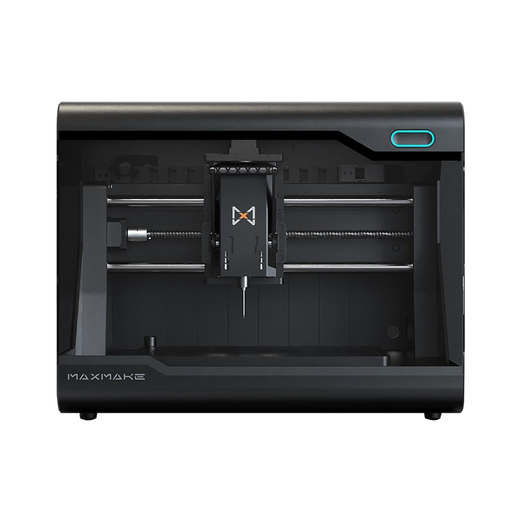
HiMill D1S Desktop-CNC-Maschine
Connect with the MAXMAKE community
Share your projects, discover new ideas, and connect with other makers.
Join Our Community
Share projects, ask questions, connect with makers