All-Metal Soldering Station CNC Project with MAXMAKE HiMILL D1S

A clean, efficient workstation is the dream of every electronics hobbyist. In this project, we push a desktop CNC setup to its limit: starting with two solid aluminum blocks, we machine an all-metal soldering station with a precise industrial look. It is not only a tool, but also a piece of desktop art.
Project Overview
This is a high-difficulty multi-part CNC assembly project involving deep pocket milling, precision alignment holes, positioning slots, and smooth multi-surface transitions. Through accurate aluminum machining, the solder spool holder, soldering iron rest, and cleaning tray are integrated into one compact metal workstation.
| Project Detail | Specification |
|---|---|
| Project Name | Heavy-Duty All-Metal Multifunction Soldering Station |
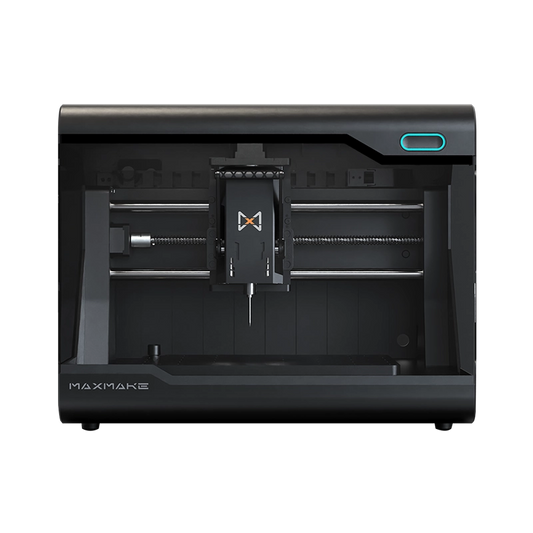
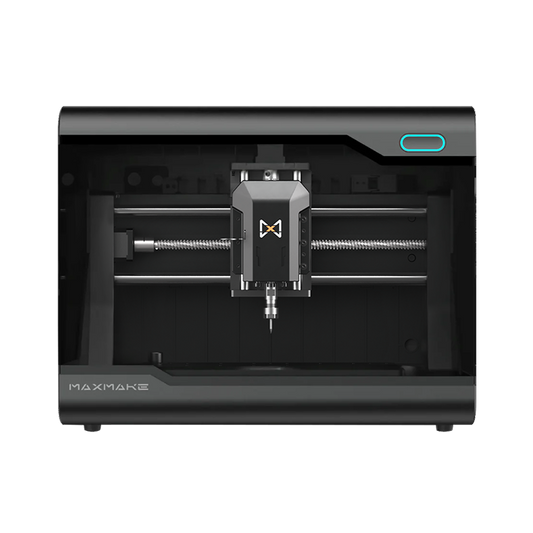
| Machine Used | MAXMAKE HiMILL D1S desktop CNC |
| Core Material | 170 mm x 90 mm x 10 mm and 100 mm x 60 mm x 10 mm aluminum blocks |
| Machining Time | About 16 hours in total, including multi-side machining and precision probing |
| Difficulty | 5/5 - two aluminum blocks, front/back machining, positioning slots, and tight fit tolerance |

Stage 1: Prep and Design
The soldering station uses a modular design. The larger aluminum block becomes the main base and support structure, while the smaller aluminum block is machined into a detailed consumable tray. To ensure a clean, tight assembly, precision fit allowances were planned during the design stage.
Tool and Material List
- Materials: one 170 mm x 90 mm x 10 mm aluminum block and one 100 mm x 60 mm x 10 mm aluminum block.
- T1: 3.175 mm three-flute spiral end mill for roughing and outer profile cutting.
- T2: 1.5 mm single-flute or three-flute spiral end mill for fine pockets and small holes.
- T3: 2R1 ball nose end mill for edge chamfering and smooth 3D surface transitions.
- Other tools: 3D probe, 3.175 mm collet, 4 mm collet, clamps, and positioning fixtures.

Stage 2: CAM Strategy and Core Machining Parameters
To achieve a satin-like surface on aluminum, each toolpath was set with conservative cutting parameters and fine stepdowns. All programs used a spindle speed of 13,000 RPM to support stable cutting and reduce the risk of aluminum sticking to the tool.
| Tool | Main Task | Feed / Plunge Rate | Stepdown | Strategy Notes |
|---|---|---|---|---|
| 3.175 mm three-flute spiral end mill | Efficient roughing and outer profile cutting | 600 mm/min cutting feed, 600 mm/min plunge rate | 0.2 mm | XY stepover: 1.27 mm, about 45% of tool diameter, balancing efficiency and tool load. |
| 1.5 mm spiral end mill | Fine pockets, precision slots, and connection holes | 400 mm/min cutting feed, 400 mm/min plunge rate | 0.08 mm | Small stepdown with steady feed helps protect the small tool during deep pocket machining. |
| 2R1 ball nose end mill | Chamfering and 3D surface finishing | 400 mm/min cutting feed, 400 mm/min plunge rate | 0.05 mm | Fine layer spacing creates smoother transitions and a cleaner metal surface feel. |
Machining note: For aluminum CNC machining on a compact desktop CNC, chip evacuation and stable workholding are just as important as feeds and speeds. A clean cut is built from the entire process, not from one parameter alone.

Stage 3: Machining and Process Control
Program Order
This project requires multiple NC program changes, including front-side machining, back-side machining, and the most critical positioning-slot operations. The programs should be run strictly in the planned order to avoid alignment errors between the two aluminum parts.
Workholding Method
The aluminum blocks were fixed using masking tape and two-part AB epoxy adhesive, with side blocks added for auxiliary positioning. This approach helps prevent movement during higher-load aluminum cutting while keeping the top surface accessible for machining.
Cooling and Chip Evacuation
Desktop CNC projects often avoid flood coolant, so strong air blast was used throughout the process. Clearing chips in time protects the cutter and helps prevent secondary cutting marks from scratching the aluminum surface.

Stage 4: Post-Processing and Final Optimization
Deburring
After machining, the edges were lightly refined with 400-grit sandpaper. This removes small burrs and improves the hand feel without changing the clean CNC-machined appearance.
Anodizing Recommendation
Anodizing is recommended for this project. It can improve surface hardness and make the final soldering station easier to customize in industrial-style colors such as titanium gray or space gray.
Precision Assembly
The parts were assembled according to the design drawings. With machining tolerance controlled within about 0.05 mm, the locating pins and screw holes align smoothly, giving the final build a precise and solid feel.

The Result
When the heavy aluminum soldering station is placed on the workbench, the cool metal texture and precise machining lines become the best reward for 16 hours of focused CNC work. The project turns two plain aluminum blocks into a practical and visually satisfying desktop tool.
- Surface quality: fine milling marks and aluminum gloss create a clean industrial finish.
- Function: the solder spool holder, stable cleaning tray, and integrated layout make soldering work more organized.
- Build value: the project shows the complete transformation from raw aluminum stock to a precise functional instrument.

Download CNC Project Files
All-Metal Soldering Station Files
Download the project files for this aluminum soldering station CNC build.
Download CNC Project FilesThis original project was developed by the MAXMAKE team. Every machined surface reflects the spirit of making, and every finished part shows what is possible with the HiMILL D1S desktop CNC.
FAQ: Aluminum Soldering Station CNC Project
Can a desktop CNC machine make an all-metal soldering station?
Yes. With rigid workholding, careful toolpath planning, and conservative aluminum cutting parameters, a desktop CNC machine can produce precise aluminum parts for a functional all-metal soldering station.
What aluminum stock was used for this CNC project?
The project used two aluminum blocks: one 170 mm x 90 mm x 10 mm block for the main base and support structure, and one 100 mm x 60 mm x 10 mm block for the consumable tray.
Why were small stepdowns used for aluminum machining?
Small stepdowns help reduce cutting load, improve tool stability, and protect small-diameter end mills during pocket machining and detailed aluminum finishing.
Is coolant required for this desktop CNC aluminum project?
Flood coolant is not always used on desktop CNC machines. In this project, strong air blast was used to remove chips, protect the cutter, and reduce surface scratches from secondary cutting.
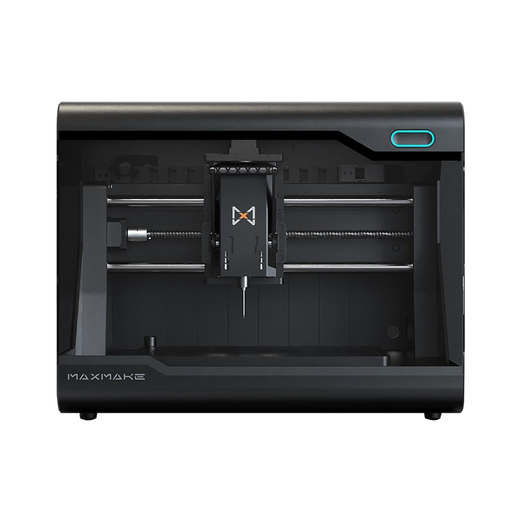
HiMill D1S Desktop-CNC-Maschine
Connect with the MAXMAKE community
Share your projects, discover new ideas, and connect with other makers.
Join Our Community
Share projects, ask questions, connect with makers