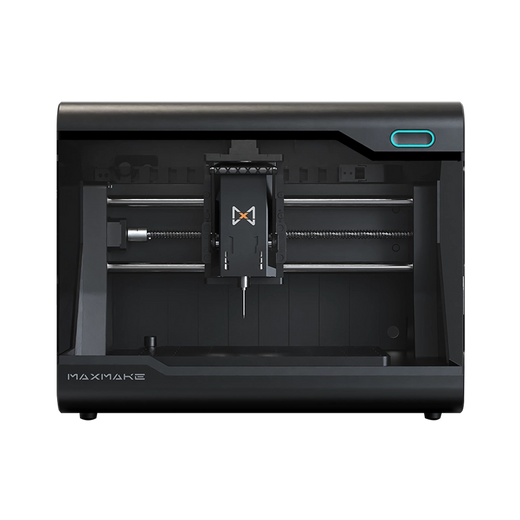
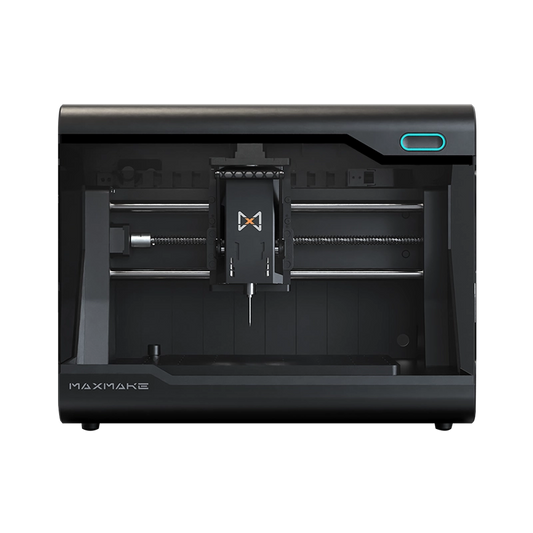
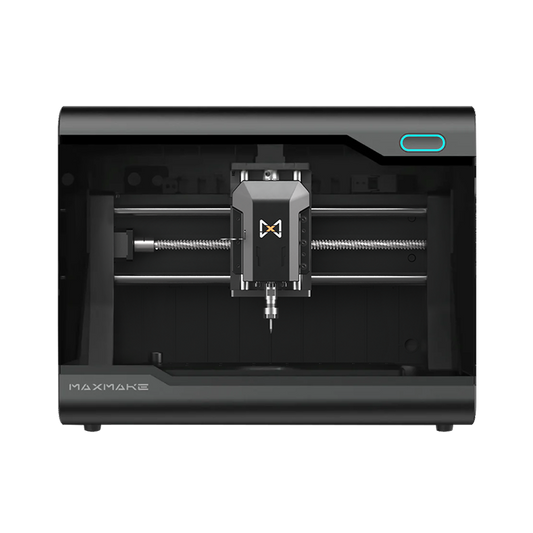
Think desktop CNCs are only for flat wood reliefs or soft plastics? Think again. Today, we're pushing the MAXMAKE HiMill D1S to its limits by machining a stunning, fully functional all-aluminum scraper tool.
We're turning a boring utility tool into a piece of industrial art with precision milling, skeletonized weight-reduction pockets, and sleek chamfers. And speaking of upgrading your workspace, our Workshop Upgrade Sale is currently LIVE! It's the perfect time to get up to 20% OFF sitewide and start making your own pro-grade metal tools. Let's dive into the build!
🛠️ Workshop Upgrade Sale!
Get 20% OFF Sitewide on machines and accessories. Equip yourself to machine metal at home.
Shop The Sale Now
Project Overview
Project Name DIY Minimalist Industrial Aluminum Scraper
Equipment Used HiMill D1S Desktop CNC
Core Principles Aluminum Milling + Skeletonized Design for Weight Reduction
Function 3D printer bed cleaning, glue removal, industrial fidget toy
Difficulty Level ★★★★☆ (Requires balancing wall thickness/strength with surface finish)
Cycle Time Approx. 8 Hours
Prep & Design
The core of this design lies in "structural aesthetics" and "ergonomics." By pocketing out the center, we reduce the heft, and by adding large chamfers on the edges, it perfectly fits the contour of your hand.
1. Materials List:
•
Aluminum Block: 100x40x10mm 6061 Aluminum blank.
•
Polishing Supplies: 200-2000 grit sandpaper, metal polishing compound, Scotch-Brite pads.
2. Essential Tooling (For High-Speed Aluminum Machining):
•
3.175mm 3-Flute Spiral End Mill: Used for heavy roughing, outer profile cutting, and profile finishing.
•
4mm & 2mm Ball Nose End Mills: Used for 3D surfacing and slope machining.
•
4mm & 2mm Chamfer Mills: Used for precision edge chamfering.

CAM Settings (Machining Parameters)
For aluminum on a desktop machine, the rule of thumb is: conservative stepdowns (0.1–0.2 mm) with high spindle speed (12,000–13,000 RPM). This minimizes chatter and produces a clean surface finish
1. Aluminum Roughing (3.175mm 3-Flute):
Stepover:1.27 mm
Stepdown:0.2 mm
Cutting Feed Rate:500 mm/min
Plunge Feed Rate:500 mm/min
Spindle Speed:13,000 RPM
2. Finishing (Slopes/Ramps - 4mm/2mm Ball Nose):
Cutting Feed Rate:200 mm/min
Plunge Feed Rate:200 mm/min
Spindle Speed:13,000 RPM
3. Finishing (Outer Profile - 3.175mm 3-Flute):
Cutting Feed Rate:500 mm/min
Plunge Feed Rate:500 mm/min
Spindle Speed:13,000 RPM
4. Edge Chamfering (4mm/2mm Chamfer Mill):
Cutting Feed Rate:500 mm/min
Plunge Feed Rate:500 mm/min
Spindle Speed:13,000 RPM

Machining Process
The HiMill D1S's rigid frame excels at aluminum cutting, keeping vibration to an absolute minimum.
1.
Workholding: The aluminum block MUST be secured using the "CA glue & painter's tape trick" to maximize the machining area and prevent resonance during heavy milling.
2.
Roughing (Taking Shape): Use the 3.175mm end mill for layered roughing, hogging out the overall shape and the large center pocket.
3.
Detailing: Swap to the smaller diameter ball nose mills to refine the sloped grip areas.
4.
Edge Chamfering: Run the chamfer toolpath. This is the core step that elevates the tactile feel, knocking down the sharp edges to reveal a brilliant, raw aluminum bevel.

Post-Processing & Assembly
With proper surface finishing, raw aluminum takes on the look of a bead-blasted Apple product — clean, uniform, premium.
1.
Deburring: Once off the machine, use a small file to clean up the edges and remove any sharp burrs.
2.
Coloring (Optional): You can anodize the part for a custom colored finish.
3.
Drilling & Tapping: The CNC spot-drills the hole locations. Drill completely through and use a tap wrench to manually cut the threads for the screws.
4.
Assembly: Secure the scraper blade to the aluminum handle using machine screws.

Final Showcase: Cold Metal, Ultimate Utility
When you hold this scraper in your hand, that hefty, cold metallic feel is something a 3D-printed plastic tool could never replicate.
•
Skeletonized Design: The futuristic frame design perfectly balances lightweight portability with structural rigidity.
•
Silky Touch: The finely polished chamfered edges fit the webbing of your hand perfectly, making prolonged use effortless.
•
Hardcore Utility: Paired with a sharp blade, it easily tackles everything from cleaning printer beds to removing stubborn glue residue.

HiMill D1S Review
This aluminum scraper build once again proves the hardcore capabilities of the HiMill D1S:
1.
Metal Machining Stability: When facing a 10mm thick solid aluminum block, the cutting process remained incredibly smooth with stable power output from the spindle.
2.
High-Precision Reproduction: The tolerance control on the chamfers and pockets is exceptional, resulting in a seamless fit when the blade is installed.
3.
Limitless Creation: If you have a solid idea, the D1S will help you turn the lines on your blueprint into real, hefty metal objects in your hands.
📥 Get the Files & Start Making
Ready to test your machine on metal? Download the blueprint files and build your own industrial scraper!
Download via Google Drive