CNC Machining a Full-Metal Raspberry Pi Case from a Solid Aluminum Block
In this project, we transform a solid 100mm × 100mm × 10mm aluminum block into a precision-engineered, full-metal Raspberry Pi enclosure from scratch. The build covers double-sided CNC milling, I/O port cutouts, alignment pin holes, and edge chamfering—delivering a production-grade, functional enclosure engineered for both physical protection and efficient thermal dissipation.
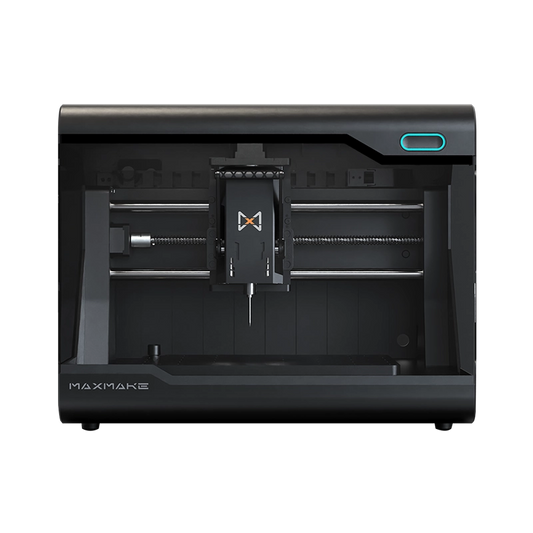
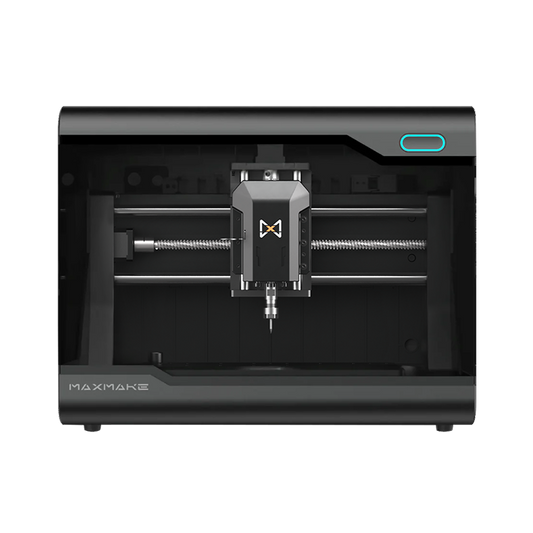
Executed entirely on the MAXMAKE HiMill-D1S Desktop CNC, this case study highlights what desktop CNC machining can truly accomplish: rigid aluminum cutting, multi-tool setup, precise double-sided flipping, and sub-0.05mm assembly tolerances.

Project Overview
This project is a double-sided fixturing aluminum milling job requiring deep-cavity clearing, I/O connector slotting, locator pin hole drilling, and smooth edge chamfering. Through high-precision aluminum cutting, the enclosure chassis, port openings, and internal alignment structures are seamlessly unified into an integrated, rock-solid housing.
- Project NameHardcore All-Metal Raspberry Pi Enclosure
- Machining PlatformMAXMAKE HiMill-D1S Desktop CNC
- Core Material100mm × 100mm × 10mm 6061 Aluminum Block
- Toolpath FilesTop_Face.nc, Bottom_Face.nc, Profile_Alignment.nc
- Estimated RuntimeApprox. 7 Hours
- Difficulty Level★★★★☆ (Two-sided setup, tight mating tolerances, alignment slots)
Phase 1: Model Design & Tooling Preparation
The enclosure follows a modular engineering architecture. The raw aluminum block is machined into the primary chassis base while integrating precisely sized I/O port openings, board mounting standoffs, and locating holes. Assembly compensation allowances were carefully factored into the CAD model during design to ensure seamless, zero-play board and cover fitment.
Tooling & Materials Checklist
- Raw Stock: 100mm × 100mm × 10mm 6061 Aluminum Block (1 pc)
-
Cutting End Mills:
- T1: 3.175mm (1/8″) 3-Flute Spiral End Mill (Large-area roughing & outer profile contouring)
- T2: 1.5mm 3-Flute Spiral End Mill (Precision internal pockets, port slots & small pin holes)
- T3: 4mm × 0.2mm × 20° Flat-Bottom V-Bit / Engraving Tool (Surface logo & detail engraving)
- T4: 2mm R1 Ball Nose End Mill (Edge deburring & 3D contour chamfering)
- Accessories & Fixturing: 3D Probe / Edge Finder, 3.175mm ER collet, 4mm ER collet, hold-down clamps, blue painter's tape, and high-strength CA / AB structural adhesive.

Phase 2: Toolpath Strategy & Core CAM Parameters
Achieving a smooth, satin-milled surface finish on aluminum requires a tailored cutting strategy for each individual tool. The spindle speed for all programs is standardized at 13,000 RPM, providing optimal cutting stability while significantly reducing the risk of built-up edge (BUE) and tool gumming.
| Tool / Strategy | Spindle Speed | Feed Rate (XY) | Plunge Rate (Z) | Stepdown (Doc) | Stepover (WOC) | Machining Objective |
|---|---|---|---|---|---|---|
| T1: 3.175mm 3-Flute Spiral End Mill | 13,000 RPM | 600 mm/min | 600 mm/min | 0.2 mm | 1.27 mm (40% dia.) | Rapid material bulk removal & overall outer profile profiling. |
| T2: 1.5mm 3-Flute Spiral End Mill | 13,000 RPM | 350 mm/min | 350 mm/min | 0.1 mm | 0.675 mm | Milling intricate port slots, cavity corners & mounting holes (light DOC + high feed prevents bit breakage). |
| T3: 4×0.2×20° Flat-Bottom V-Bit | 13,000 RPM | 400 mm/min | 400 mm/min | 0.1 mm | 0.05 mm | Fine surface engraving for branding, logos, and crisp geometric vector lines. |
| T4: 2mm R1 Ball Nose End Mill | 13,000 RPM | 400 mm/min | 400 mm/min | 0.05 mm | — | Smooth 3D edge chamfering, removing sharp burrs and imparting a sleek tactile feel. |

Phase 3: CNC Machining & Process Control
-
Program Execution Sequence: This multi-stage machining workflow requires precise file switching. Execute operations strictly in sequence:
Top_Face.nc→Bottom_Face.nc→Profile_Alignment.nc. - Rigid Fixturing Scheme: The aluminum stock is secured using the reliable “Painter’s Tape + Super Glue (CA/AB adhesive)” method, reinforced with side locator stop blocks to eliminate any lateral workpiece shifting under aggressive cutting loads.
- Chip Evacuation & Thermal Management: Because desktop CNC machining does not use flood coolant, continuous high-velocity air blast is essential throughout the run. Clearing chips instantaneously protects cutting edges and prevents surface marring caused by chip recutting.
- Work Coordinate System (WCS) Zeroing: Use an electronic edge finder or 3D probe to establish accurate X, Y, and Z zero references at the stock center or top-left corner, ensuring 100% alignment with your CAM setup origin.
- Pre-Flight Safety Check: Confirm that the transparent machine enclosure is securely latched, the air blast nozzle is aligned with the cutting zone, and the emergency stop (E-Stop) switch is fully operational.

Phase 4: Post-Processing & Final Assembly
- Edge Deburring: Once machining is complete, gently hand-finish the outer perimeters and engraved grooves using 400-grit sandpaper or a deburring tool to remove microscopic burrs and enhance tactile grip.
- Surface Anodizing (Recommended): Anodizing is highly recommended. It significantly boosts surface hardness, prevents oxidation, and allows for personalized industrial aesthetics such as Silver Matte or Space Gray.
- Thread Tapping & Fastening: Tap threads into the pre-milled pilot holes and secure all hardware according to the engineering drawings. Thanks to tight machining tolerances held under 0.05mm, the locating pins, motherboard standoffs, and screw holes mate effortlessly.
- Quality Inspection: Verify all critical dimensions against the design blueprints, confirming that USB, HDMI, Type-C, Ethernet, and GPIO cutouts align perfectly with the Raspberry Pi board.

The Final Showcase
Placing this hefty, all-aluminum Raspberry Pi case onto the workbench is deeply rewarding—that distinct cool metal texture and mechanical precision are the ultimate payoff for 7 hours of dedicated machining.
- Industrial Aesthetics: Crisp micro-milling patterns harmonize with the lustrous sheen of aerospace-grade aluminum to deliver true industrial-grade craftsmanship.
- Structural Rigidity: Solid aluminum mass paired with high-precision damping fitment gives the board superior mechanical protection and high-efficiency thermal performance.
- Desktop CNC Capability: Taking a raw aluminum billet all the way to a finished, functional enclosure demonstrates the real-world precision and reliability of the HiMill-D1S in small-scale metal prototyping.

Free Project Files & Downloads
Ready to machine your own all-metal Raspberry Pi enclosure? Download the complete project package (including CAD models, .nc G-code files, and toolpath configurations) via the Google Drive link below:
Download Raspberry Pi Aluminum Case Project Files (Google Drive)
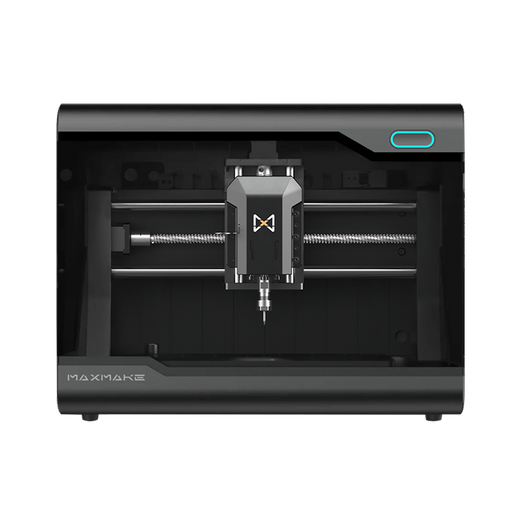
HiMill D1 Desktop CNC Machine
Connect with the MAXMAKE community
Share your projects, discover new ideas, and connect with other makers.
Join Our Community
Share projects, ask questions, connect with makers