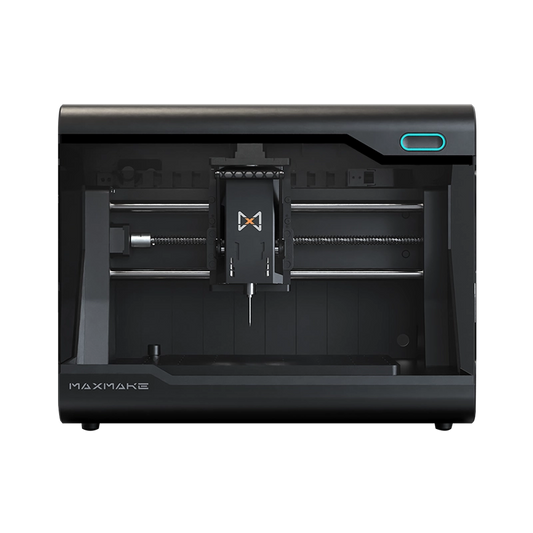
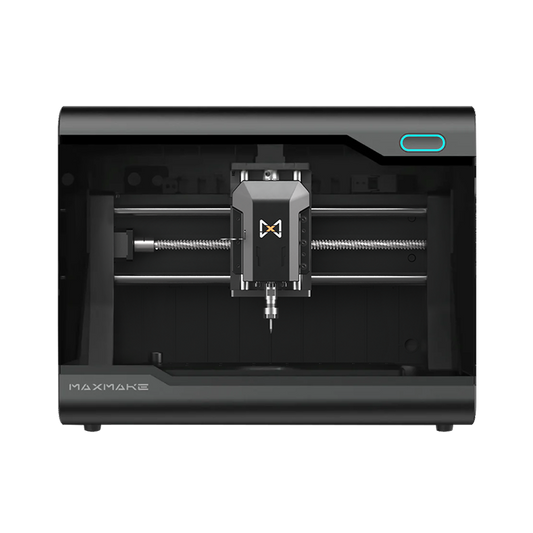
[CNC Masterclass] Carving History: Machining a Brass Napoleon Coin with MAXMAKE HiMill D1S 🦅
Who says desktop CNC is only for basic functional parts? Today, we are taking precision brass engraving to the next level by machining a stunning replica of a Napoleon commemorative coin on the HiMill D1S Desktop CNC.
We're turning cold metal into a piece of history that spans centuries, where every single toolpath pays homage to craftsmanship and micron-level precision. Let's dive into the complete workflow and tested parameters!
Project Overview
- Project NameDIY Napoleon-Themed Brass Coin
- Equipment UsedHiMill D1S Desktop CNC
- Core PrinciplesHigh-Precision Brass Relief Carving + Post-Processing
- ApplicationsDesktop Collectible, Custom Accessory, Personalized Keepsake
- Difficulty Level★★★★☆ (Advanced: Requires toolpath optimization)
- Cycle TimeApprox. 4 Hours
Prep & Design
The core of coin replication lies in "detail reproduction + material stability." Planning your layout and tool selection ahead of time will double your machining efficiency.
1. Materials List (BOM)
- Brass Blank: 60 × 60 × 3.5mm solid brass plate.
- Polishing Supplies: Assorted sandpaper (400–2000 grit), brass polishing compound, and buffing pads.
2. Essential Tooling
- 2.5mm Single Flute Spiral End Mill: Dedicated to brass roughing and material clearance.
- 0.2mm Flat Bottom Engraving Bit: Used for ultra-fine relief detailing.
- 3.175mm Single Flute Spiral End Mill: Used for the final outer profile cut.
CAM Strategy & Machining Parameters
A universal parameter set adapts to both relief and profile machining. With minor tweaks for detail reproduction, even beginners can easily master this workflow.
| Machining Phase | Tooling | Spindle Speed | Feed Rate (XY) | Plunge Rate (Z) | Stepdown (DOC) | Stepover (WOC) |
|---|---|---|---|---|---|---|
| 1. Brass Roughing | 2.5mm Single Flute Spiral End Mill | 13,000 RPM | 200 mm/min | 100 mm/min | 0.2 mm | 1.0 mm |
| 2. Relief Finishing | 0.2mm Flat Bottom Engraving Bit | 13,000 RPM | 200 mm/min | 100 mm/min | 0.2 mm | 0.1 mm |
| 3. Outer Profile Cut | 3.175mm Single Flute Spiral End Mill | 13,000 RPM | 200 mm/min | 100 mm/min | 0.2 mm | 1.0 mm |

Machining Process
The high-precision spindle and stable positioning of the HiMill D1S ensure micron-level accuracy when reproducing relief details.
- Workholding & Calibration: Firmly secure the brass plate to the wasteboard using high-tack tape, assisted by edge stops to prevent shifting during machining.
- Roughing (Material Removal): Use the 2.5mm single flute end mill to clear the bulk material and define the basic circular shape of the coin.
- Relief Finishing: Swap to the 0.2mm ultra-fine flat bottom engraving bit to reproduce the Napoleon eagle crest, laurel wreaths, and lettering. The lines come out crisp and burr-free, laying a perfect foundation for polishing.
- Outer Profile Cutoff: Finally, use the 3.175mm end mill to cut out the overall outer contour.

Post-Processing & Assembly
A standardized post-processing routine perfectly balances the historical feel with the premium metallic texture.
- Deburring: Use 400-grit sandpaper to smooth the edges of the coin and remove machining marks. Progress to 800–1200 grit to refine the finish and eliminate sharp burrs.
- Cleaning: Wipe the surface with alcohol to remove residual chips and cutting oils.
- Polishing (Optional): Apply brass polishing compound with a soft cloth to buff the piece and elevate its luster.
- Detail Refinement: Use a fine needle to clear any polishing residue trapped in the relief pockets, ensuring every letter and pattern remains crisp and three-dimensional.
Final Showcase: A Coin, A Piece of History
When a raw brass blank is reborn through precision CNC carving, the Napoleon-themed commemorative coin reveals a texture that transcends centuries:
- Eagle Crest Relief: The feather textures on the wings are clearly visible, and the lines are sharp and powerful, restoring the majesty of the imperial emblem.
- Lettering Reproduction: The depth of the edge lettering and year digits is perfectly consistent. Every character is replicated flawlessly without blurring or distortion.
- Retro Patina: The polished brass naturally emits a soft glow. Paired with a distressed finish, it carries the heft of metal while retaining the warmth of handcrafted art.
- Versatile Use Cases: It serves perfectly as a desk display, journal decor, or customized keychain. Every detail tells a historical story.

HiMill D1S Machine Review
This coin replication project once again proves the versatile capabilities of the HiMill D1S:
- Detail Reproduction Stability: Excellent repeatability. The relief depth and line thickness remain perfectly consistent, requiring zero recalibration.
- Machining Ceiling: From delicate feather textures to crisp lettering, the machine perfectly replicates the minutest details with high surface finish and zero blurring.
- Limitless Creativity: As long as you can design it, the D1S can turn it into a physical brass coin. Whether it's historical themes, personal IP, or original designs, it unlocks endless possibilities!
📥 Get the Project Files
Challenge your machine's precision—download the design files and toolpaths now:

HiMill D1 Desktop CNC Machine
Connect with the MAXMAKE community
Share your projects, discover new ideas, and connect with other makers.
Join Our Community
Share projects, ask questions, connect with makers