Skip to content
Free Shipping on Orders over $300
Email:hello@maxmake.com

MAXMAKE CNC Blog

[CNC Metalcraft] Machining an Aluminum EDC Playing Card with MAXMAKE HiMill D1S

by CHENmaxmake 08 Jun 2026 0 comments
[CNC Metalcraft] Machining an Aluminum EDC Playing Card with MAXMAKE HiMill D1S

Who says desktop CNCs are only for making coins? Today, we're pushing the MAXMAKE HiMill D1S to craft an exclusive, aluminum EDC playing card. Let cold metal become your go-to pocket fidget toy, where every engraved line is a testament to individuality and precision.

I. Project Overview

Project Name DIY Aluminum EDC Playing Card & Slider
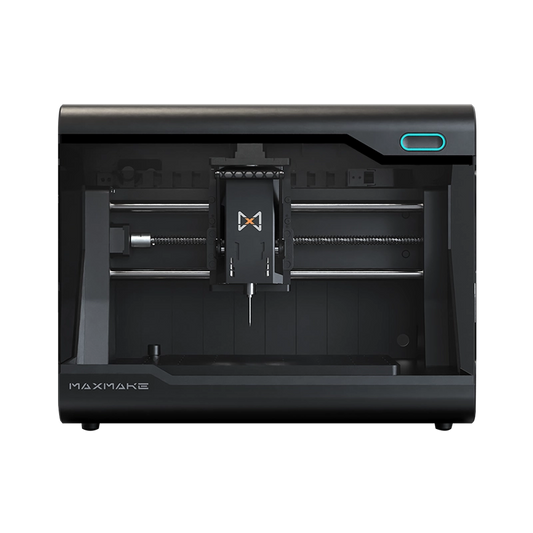
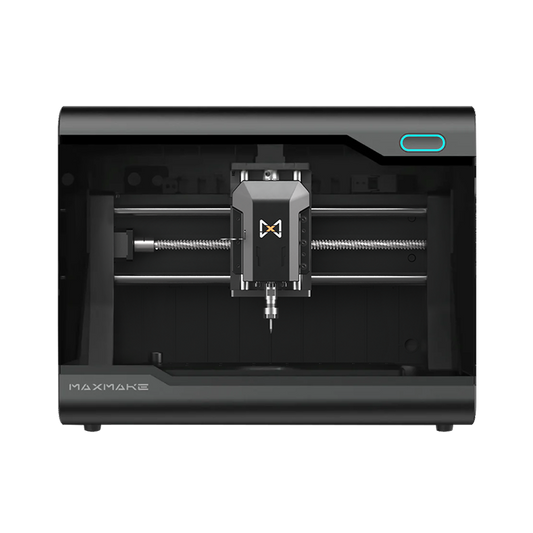
Equipment Used MAXMAKE HiMill D1S Desktop CNC
Core Principles High-Precision Aluminum Relief Engraving + Standardized Post-Processing
Function EDC Pocket Fidget Toy, Desktop Display, Custom Gift
Difficulty Level Advanced (Great practice for flat relief machining)
Cycle Time Approx. 7 Hours

II. Prep & Design

The core of an EDC playing card is "tactile comfort + recognizable details." Planning your layout and chamfer parameters ahead of time will double your machining efficiency.

1. Materials List

Aluminum Blanks: 100x40x10mm and 48x40x10mm aluminum blocks.
Polishing Supplies: Assorted sandpaper (400-2000 grit), metal polishing compound, buffing pads.
Accessories: 3D Edge Finder Probe, 4mm Collet, 3.175mm Collet.

2. Tooling Selection (High-Speed Aluminum Set)

3.175mm 3-Flute Spiral End Mill: Dedicated for aluminum roughing and outer profile cutting.
1.5mm 3-Flute Spiral End Mill: Used for internal pocketing.
20° 0.2mm Flat Bottom Engraving Bit: Specifically for fine detail relief carving (suits, numbers, etc.).
2mm Ball Nose End Mill (R1): Used for final outer profile cut-off and edge filleting/chamfering.
Tooling and materials required for CNC machining an aluminum EDC card on the HiMill D1S.

III. CAM Settings (Machining Parameters)

A universal parameter set designed for aluminum. With minor tweaks, it adapts to various relief patterns, making it easy for beginners to grasp.

A. EDC Card Machining

Tool: 3.175mm 3-Flute Spiral End Mill (Metal Roughing)

Stepover (Ae): 1.5 mm

Stepdown (Ap): 0.2 mm

Cutting Feed: 600 mm/min

Plunge Feed: 600 mm/min

Spindle Speed: 13,000 RPM

Tool: 20° 0.2mm Flat Bottom Engraving Bit (Relief Details)

Stepover (Ae): 0.1 mm

Stepdown (Ap): 0.2 mm

Cutting Feed: 300 mm/min

Plunge Feed: 300 mm/min

Spindle Speed: 13,000 RPM

Tool: 2mm Ball Nose End Mill (Edge Chamfering)

Plunge Feed: 300 mm/min

Spindle Speed: 13,000 RPM

B. EDC Slider Machining

Tool: 3.175mm 3-Flute Spiral End Mill (Surfacing)

Stepover (Ae): 1.5 mm

Stepdown (Ap): 0.2 mm

Cutting Feed: 600 mm/min

Plunge Feed: 600 mm/min

Spindle Speed: 13,000 RPM

Tool: 1.5mm 3-Flute Spiral End Mill (Inner Pocketing)

Stepover (Ae): 0.675 mm

Cutting Feed: 500 mm/min

Plunge Feed: 500 mm/min

Spindle Speed: 13,000 RPM

Tool: 2mm Ball Nose End Mill (Chamfering)

Plunge Feed: 300 mm/min

Spindle Speed: 13,000 RPM

CAM software settings for 3D machining custom aluminum EDC cards.

IV. Machining Process

The high-precision spindle and stable positioning of the HiMill D1S ensure that flat relief replication maintains micron-level accuracy.

1.
Workholding & Calibration: Firmly secure the aluminum plate to the wasteboard using tape and CA glue. Use edge stops to assist positioning, preventing any displacement during heavy milling.
2.
Roughing (Taking Shape): Use the 3.175mm end mill to clear the bulk material. This removes excess stock in one go, rapidly forming the rectangular base of the playing card.
3.
Relief Finishing: Swap to the 20° 0.2mm flat bottom engraving bit to reproduce the suits, numbers, and geometric textures. The lines will come out crisp and burr-free.
4.
Outer Profile Cutoff: Finally, use the 2mm ball nose end mill to execute the overall outer contour cut and apply a smooth fillet to the edges.

V. Post-Processing

A standardized post-processing workflow perfectly balances industrial texture with a comfortable grip.

1.
Deburring: Use 400-grit sandpaper to sand the card's edges and remove cutting marks. Switch to 800-1200 grit to refine the fillets, ensuring there are no sharp edges to cut your hands.
2.
Cleaning: Wipe the surface with alcohol to remove residual chips and cutting oils.
3.
Polishing (Optional): Apply metal polishing compound with a soft cloth to buff the aluminum, elevating its premium feel.
4.
Detail Adjustment: Use a fine needle to clean any polishing residue trapped within the relief pockets, ensuring every texture remains crisp and 3D.

VI. Final Showcase: A Card, An Attitude

When warm aluminum is reborn through precise CNC carving, an EDC playing card that blends practicality with visual appeal finally reveals its crisp, rugged texture:

Clear Textures: The geometric lines are distinct, and the engravings are sharp and forceful, restoring classic playing card elements while adding an industrial aesthetic.
Silky Edges: Finely sanded and filleted edges fit comfortably in the hand, with absolutely no sharp burrs.
Metallic Vibe: The polished aluminum emits a cold luster, maintaining the heft of metal while keeping the warmth of a handmade craft.
Versatile Usage: Perfect as a daily pocket fidget toy or a desktop display. Every detail showcases personality and taste.

📥 Get the Files & Start Making

Ready to test your machine on metal? Download the blueprint files and build your own industrial EDC card!

Download via Google Drive
Prev post
Next post

Leave a comment

All blog comments are checked prior to publishing

Someone recently bought a

Thanks for subscribing!

This email has been registered!

Shop the look

Choose options

Edit option
Back In Stock Notification
Compare
Product SKU Description Collection Availability Product type Other details

Choose options

this is just a warning
Login

Before you leave...

Take 20% off your first order

20% off

Enter the code below at checkout to get 20% off your first order

CODESALE20

Continue Shopping