


DIY CNC Cookie Mold: Carving 3D Tiger Relief in Beech Wood (HiMill D1S Guide)🐯🍪
Still using mass-produced plastic molds for your cookies? It is time to add something more substantial to your baking with CNC! Today, I will share how to use the HiMill D1S Desktop CNC to turn a solid piece of beech wood into a refined "Tiger Descending the Mountain" cookie mold. From 3D relief toolpath settings to food-safe surface treatment, this is the complete, hands-on workflow. A file link is included at the end.
Project Overview
- Project Name3D Relief Zodiac Tiger Head Cookie Mold
- EquipmentHiMill D1S Desktop CNC
- Core Challenge3D curved-surface finishing to reproduce fur details + hardwood cutting
- Finished FeaturesDeep relief, strong three-dimensional detail, smooth release, and food safety
- Difficulty⭐⭐⭐ (Requires knowledge of 3D toolpath strategies)
- Machining TimeApprox. 3h
- Main MaterialHigh-quality beech wood, [e.g., 20mm] thick
Preparation
When making food-contact items, material selection comes first.
Hardware & Materials (BOM)
- Wood: Beech wood.
- Why beech? It is hard, fine-grained, odor-free, and wear-resistant, making it an excellent choice for food molds.
- Finish: Food-grade mineral oil (or walnut oil or beeswax).
- Cleaning: A stiff bristle brush for removing chips from deep areas.
Recommended Tooling (For 3D Relief)
If you want to carve the tiger's whiskers, a standard flat-bottom tool is not enough.
- Roughing Tool: Single-flute spiral end mill - for quickly removing most of the excess wood.
- Finishing Tool: Tapered Ball Nose End Mill.
Purpose: It leaves a very smooth finished surface that requires almost no sanding.

Design & CAM Strategy (The Secret of 3D Relief)
When making a mold, the most important mental shift is to make the design recessed (an intaglio). That way, the cookie comes out with a raised relief (a positive form).
Model Preparation
- I used a grayscale image (Height Map) to generate the tiger's 3D model.
- Key setting: Make sure the model is recessed. Set the depth to [e.g., 6mm - 8mm] (too deep makes demolding difficult, while too shallow reduces the three-dimensional effect).

CAM Toolpath Settings (HiMill D1S Parameters)
Beech wood is relatively hard, so the parameters should not be too aggressive.
-
3D Roughing:
- Strategy: Parallel machining or offset clearing.
- Stock to Leave: 0.5mm (left for the finishing tool).
- Feed Rate: 600] mm/min.
-
3D Finishing - The Moment the Details Appear:
- Strategy: 45-degree raster angle (so the tool marks are less noticeable).
- Tool: R0.5 tapered ball nose cutter.
- Stepover: This is the key! Set it to 8%-10% of the tool diameter (for example, 0.1mm).
- Principle: The smaller the stepover, the smoother the finished surface and the less sanding it needs. It will take longer, but the HiMill D1S can run automatically while you wait, making the extra time worthwhile.

CNC Machining Process
The HiMill D1S starts working.
- Roughing: The machine moves quickly and wood chips fly. At this stage, the tiger is not visible yet; you can only see a deep pocket.
- Tool Change: Install the fine tapered ball nose cutter and re-zero the Z axis.
- Finishing: This is deeply satisfying. The tool tip works like an embroidery needle, peeling the wood away little by little as the tiger's nose, eyes, and even the "King" stripes on its forehead gradually appear.
- Observation: Thanks to the stable spindle of the HiMill D1S, the surface does not burn even when machining hard beech wood, and the grain remains very clean.

Post-Processing & Food-Safe Care
The mold may feel slightly rough when it comes off the machine. Proper treatment helps prevent dough from sticking.
- Cleaning: Use a stiff brush to remove loose dust from the deep areas.
- Sanding: Lightly sand the inside of the mold with 400-600 grit sponge sandpaper. Be careful not to soften the details.
-
Oiling:
- Soak the mold in food-grade mineral oil, or apply a thick coat of beeswax.
- After the beech wood absorbs the oil, its color becomes deeper, warmer, and more lustrous. The oil also forms a protective layer to help prevent mold and cracking.
- Leave it to dry for 24 hours before use.
Final Test: Bake a Batch of Tiger Cookies
You do not know whether a mold works until it goes into the oven.
- Recipe Tip: Use a non-spreading cookie recipe (with a moderate amount of butter and no baking powder); otherwise, the tiger may turn into a "chubby cat" after baking.
- Pressing Technique: Dust the mold with a little dry flour to prevent sticking, press in the dough, and tap it gently. A lifelike tiger should release from the mold.
- Baking: Put it in the oven and bake.
Result Showcase
Look at the photos! The tiger's fur is clearly visible on the cookies, and its expression is sharp. The HiMill D1S reproduces every detail of the digital model beautifully.

Conclusion
The joy of making your own mold with the HiMill D1S is that you can turn almost any design into food. Whether it is a zodiac animal, a logo, or a complex emblem, CNC can help bring it to life.
Tips for Beginners
- Choose the right tool: Be sure to get a tapered ball nose cutter. It is the essential tool for relief work.
- Be patient: 3D finishing takes time, but it is worth it when you do not have to hand-carve every detail.
If you are also a baking enthusiast, pick up a CNC and start your own custom baking shop.
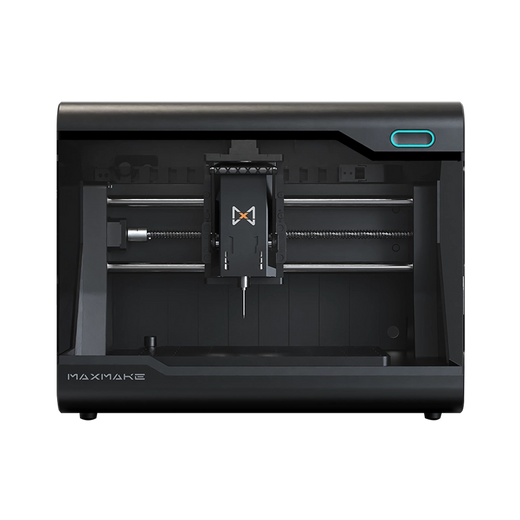
HiMill D1S - Pro Desktop CNC with Ball Screws & QTC
Connect with the MAXMAKE community
Share your projects, discover new ideas, and connect with other makers.
Join Our Community
Share projects, ask questions, connect with makers


1 comment
thank you