From Timber to Treasure: Do You Truly Understand the Material You’re Cutting? — Wood Edition
I. Wood "Personalities": A Pre-Machining Diagnosis
Wood is an anisotropic material—its density and fiber direction dictate the logic of every toolpath move. Before you cut, you must diagnose the material.
Softwoods & MDF
Includes species like Pine and Basswood, plus medium-density fiberboard (MDF). Loose fiber structure leads to low cutting resistance but makes it prone to fuzzing. MDF, while grain-free, has poor thermal conductivity, requiring strict heat management to prevent charring and discoloration.
Hardwoods
Includes dense species like Walnut, Oak, and Maple (density >0.6g/cm³). Tight grain structure creates high cutting forces, demanding rigid tooling and efficient chip evacuation to avoid tool breakage and overheating.

Fig 1: Identifying material variance is the foundational step in setting CNC parameters.
II. Hardware & Tooling: The D1S Advantage
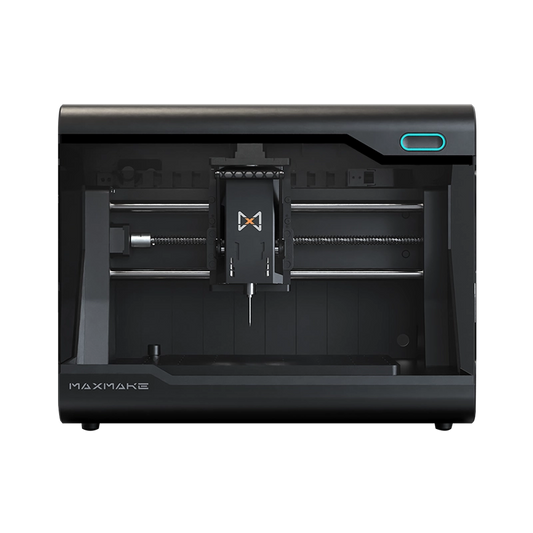
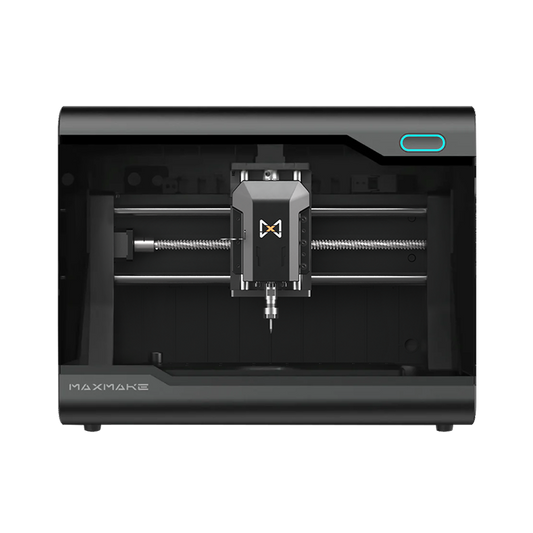
The versatility of the D1S lies in its interchangeable Collet Kits, which define the performance ceiling of your workstation.
- 3.175mm (1/8") System: Ideal for high-precision relief carving and fine detail work.
- 6mm / 1/4" System: Enabled via Collet Kit upgrade. Offers 4x the rigidity for heavy-duty hardwood roughing.
The Expert’s Tool Library:
Chip Evacuation King
Prevents Fiber Tearing
3D Relief Master
Razor-sharp Detail

III. Field-Tested Optimization Data
1.Roughing Phase: Rapid Material Removal
Objective: Remove material in the shortest time possible.Recommended tools: Single-flute or corn cob end mills.
| Material | Tool | RPM | Feed | DOC | Logic |
|---|---|---|---|---|---|
| MDF / Soft Pine | 3.175 Corn Cob | 12,000 | 800-1000 | 2.5-3.0mm | Prevents resin melting. |
| Med / Hardwood | 3.175 Single-Flute | 13,000 | 600-800 | 1.0-1.5mm | Protects 250W spindle. |
| High-Efficiency | 6mm Single-Flute | 13,000 | 1000 | 2.0-3.0mm | Efficiency tripled via 6mm. |
2. Finishing Phase: Achieving Silky Surfaces
Objective: Eliminate tool marks. Stepover is the critical parameter.
Recommended tool: Double-flute ball nose end mill.
| Machining Goal | Feed Rate | Stepover | Logic |
|---|---|---|---|
| Standard Finish | 800 mm/min | 0.3mm (10%) | Optimal speed & feel. |
| Art-Grade Relief | 500 mm/min | 0.1mm (3%) | "Mirror-smooth" results. |
3. Detail Engraving:
Recommended tool: V-bit engraving tool.Maintain feeds between 500-800 mm/min. In hardwoods, always reduce DOC to protect fragile V-tips from snapping.

IV. Deep Analysis: Expert Logic
• Chip Load: Every cut shears a specific thickness. Too fast causes lost steps; too slow causes bit rubbing and charring.
• Grain Direction: Resistance spikes on end-grain. For Oak, use Climb Milling for the final pass to achieve the cleanest surface.
• Power Management: Spindle peaks at 13,000 RPM. Rule: If resistance occurs, reduce DOC rather than Feed Rate to avoid bit annealing.
Clean = Perfect
Screaming = Friction
Flakes = Perfect
Powder = Grinding
Warm = Normal
Hot = Parameters Wrong
Expert Tips: Avoiding the Pitfalls
Roughing: Use Conventional to minimize vibration. Finishing: Use Climb for the final pass to achieve a surface finish without fiber tear-out.
Charring means you're too slow! Keep feeds above 500mm/min at 13k RPM to ensure you're shearing the wood, not rubbing it.
Cross-grain paths spike resistance. Reduce feed rate by 20% for complex orientations to prevent spindle overload and lost steps.
Sawdust is a thermal insulator. Trapped chips lead to bit softening. Always clear chips regularly or use a dust collection system.
VI. Maintenance: Precision & Longevity
Keep the spindle taper dust-free. Even a microscopic speck inside the collet causes Runout, leading to chatter marks on hardwoods.

Professional Tools + Deep Knowledge = Masterful Artistry.
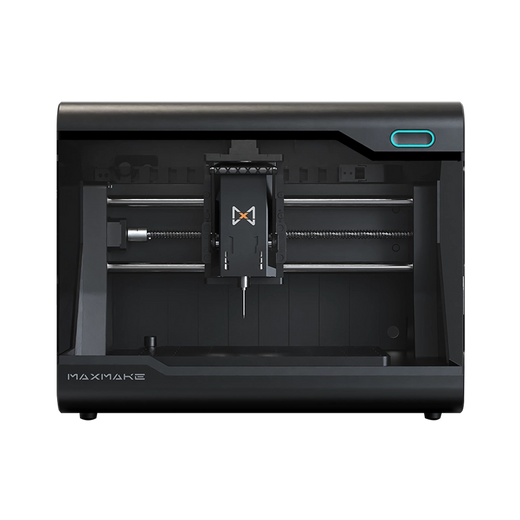
HiMill D1S - Pro Desktop CNC with Ball Screws & QTC
Connect with the MAXMAKE community
Share your projects, discover new ideas, and connect with other makers.
Join Our Community
Share projects, ask questions, connect with makers