CNC Machining a Two-Part Aluminum Soft Plastic Fishing Lure Mold | MAXMAKE
For passionate anglers, nothing tops the thrill of landing a trophy bass on a custom lure you crafted with your own hands. In this project, we harness the high-precision metal cutting capability of the MAXMAKE HiMill-D1S Desktop CNC to transform raw solid aluminum billets into an ultra-precise, two-piece ribbed soft plastic worm mold.
From multi-tool CAM planning to sub-millimeter cavity detailing and soft plastic pouring, follow this complete workflow to experience the ultimate craft of desktop CNC mold making.

Project Overview
This project tackles deep, high-precision cavity milling. To ensure the finished soft baits exhibit mirror-smooth surface skins and razor-sharp rib profiles, we applied a multi-stage, high-runtime machining strategy. By precision-milling both mold halves (top and bottom faces) along with dowel alignment pin holes, we achieve seamless mold closure without flash or parting line mismatch.
- Project NameRibbed Soft Plastic Fishing Lure Mold
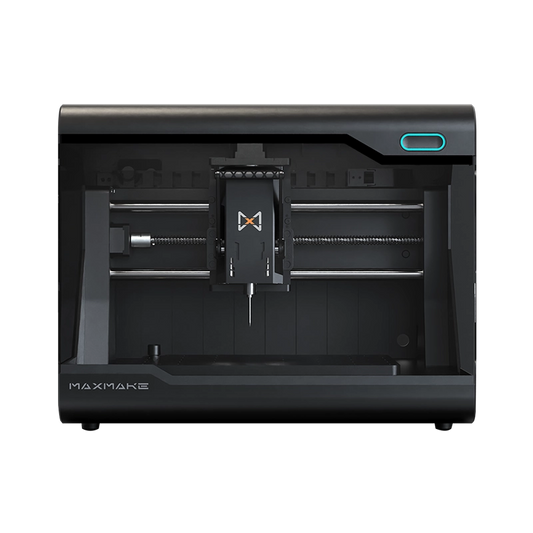
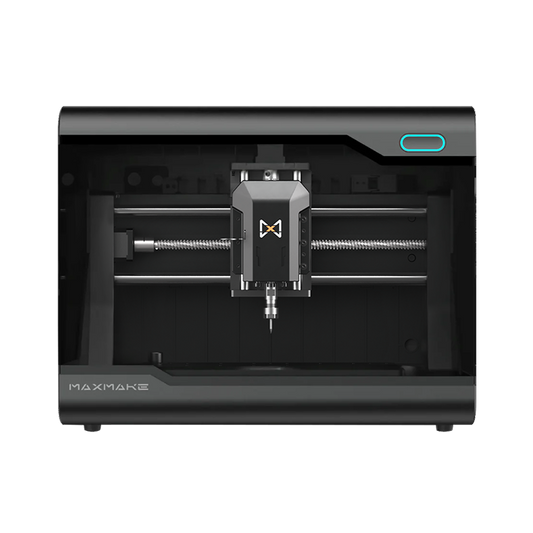
- Machining PlatformMAXMAKE HiMill-D1S Desktop CNC
- Core Material150mm × 100mm × 10mm 6061 Aluminum Blocks (2 pcs)
- Estimated RuntimeApprox. 24 Hours (Multi-stage programs for both mold halves & alignment pins)
- Difficulty Level★★★★★ (Demanding: ultra-fine stepover control & multi-program registration accuracy)
Phase 1: Mold Design & Tooling Preparation
The mold is engineered as a precision two-piece clamshell assembly featuring alignment dowel pins to guarantee exact registration between top and bottom halves. Because the bait body is wrapped in dense, ultra-fine annular ribs, three core cutting tools are deployed in precise coordination.
Tooling & Materials Checklist
- Raw Stock: 150mm × 100mm × 10mm 6061 Aluminum Blocks (scratch-free surface).
-
Cutting End Mills:
- T1: 3.175mm (1/8″) 3-Flute Spiral End Mill (Bulk pocket clearing & roughing)
- T2: 1.5mm Single-Flute / 3-Flute Spiral End Mill (Rest milling in tight cavities, narrow runner gates & pin holes)
- T3: 2mm R1 Ball Nose End Mill (Core tool for fine rib details, micro-grooves & 3D curved surfaces)
- Accessories & Fixturing: Alignment dowel pins, step clamp sets, blue painter's tape, structural AB/CA adhesive, 3.175mm & 4mm collets, and 3D Touch Probe.

Phase 2: Toolpath Strategy & Core CAM Parameters
To produce a mirror-polished cavity wall straight off the machine, the spindle speed across all toolpaths is fixed at 13,000 RPM. The program sequence in Siemens NX CAM is configured to optimize chip loads and eliminate tooling marks.
| Tool / Strategy | Spindle Speed | Feed Rate (XY) | Stepdown (DOC) | Stepover (WOC) | Machining Objective |
|---|---|---|---|---|---|
| T1: 3.175mm 3-Flute Spiral End Mill | 13,000 RPM | 600 mm/min | 0.2 mm | 1.27 mm (50% dia.) | Cavity Roughing: Fast bulk material removal to establish primary lure geometry. |
| T2: 1.5mm Spiral End Mill | 13,000 RPM | 280 mm/min | 0.1 mm | 0.675 mm (45% dia.) | Corner Clearing & Pin Holes: Rest-milling narrow cavity zones inaccessible to T1. |
| T3: 2mm R1 Ball Nose End Mill | 13,000 RPM | 350 mm/min | 0.05 mm | 0.05 mm | 3D Surface Finishing: Sculpting ultra-fine rib rings and creating mirror cavity walls. |

Phase 3: CNC Machining & Registration Control
- Program Execution Order: The job comprises 5 distinct NC programs executed in sequence, covering Top Face and Bottom Face operations for Mold Half #1 and Mold Half #2, finalized by the critical Dowel Pin Alignment routine.
- Dual-Stage Workholding: The top-side cavity is secured with sturdy mechanical hold-down step clamps. For bottom-side operations, pre-drilled dowel pins establish perfect physical alignment, supported by high-tack tape to prevent shifting.
- High-Velocity Air Blast: Machined dry without flood coolant. Continuous high-pressure air blast evacuates fine aluminum chips immediately, preventing chip packing inside tiny ribbed channels that could cause tool breakage or surface gouging.

Phase 4: Post-Processing & Soft Bait Casting
- Edge Deburring: After milling, lightly brush the outer mold mating surfaces with 400-grit sandpaper to remove micro-burrs and ensure 100% flush parting line contact.
- Anodizing (Recommended): Anodizing the aluminum mold enhances surface hardness, resists wear over thousands of pours, and facilitates effortless bait demolding.
- Mold Assembly & Pouring: Lock both mold halves together using alignment dowel pins and a clamp vise. Inject or pour liquid plastisol (heated to ~350°F / 175°C with custom colorants and glitters) through the sprue gate. Allow 3–5 minutes to cool, open the mold, and reveal vibrant, store-quality soft baits!

The Final Showcase
Thanks to the ultra-fine 0.05mm stepover machining, the molded soft plastics release with incredible gloss, crisp texture, and zero flashing.
- Ultra-High Precision: Every annular rib is razor-sharp, delivering unmatched underwater micro-vibrations and action.
- Industrial Durability: 24 hours of precision machining yields a heavy-duty, reusable aluminum mold that will pour thousands of lures for years.
- Unlimited Customization: Total lure freedom—tailor soft plastic durometer, colors, flakes, and floating scents specifically to your local fishing conditions.

Free Project Files & Downloads
Download the complete project package (including CAD models, .nc toolpath G-code files, and machining parameters) via the Google Drive link below:
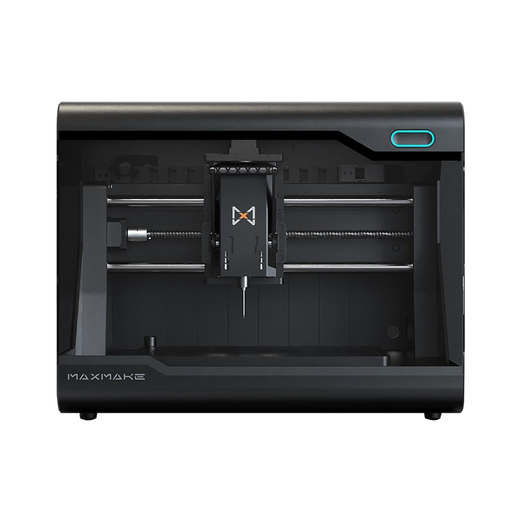
HiMill D1S - ボールねじとQTCを備えたプロフェッショナルデスクトップCNC
Connect with the MAXMAKE community
Share your projects, discover new ideas, and connect with other makers.
Join Our Community
Share projects, ask questions, connect with makers